AI systems
Small-business website audit skill
A reusable AI coding-agent skill that turns website inspection into a prioritized, evidence-based audit covering customer clarity, conversion, accessibility, local SEO, trust and technical quality.
- Active
- 14 Aug 2026
- Workflow design, accessibility QA framework, prompt direction, testing and human evaluation
- Codex skills
- Prompt design
- AI-agent-generated analyzer
- Accessibility QA
- Local SEO auditing
- Structured evaluation
- Human review
Project overview
This project packages a repeatable small-business website review into a real AI coding-agent skill. It is designed for owners, nonprofit teams and developers who need specific next steps rather than a generic checklist or an unexplained score.
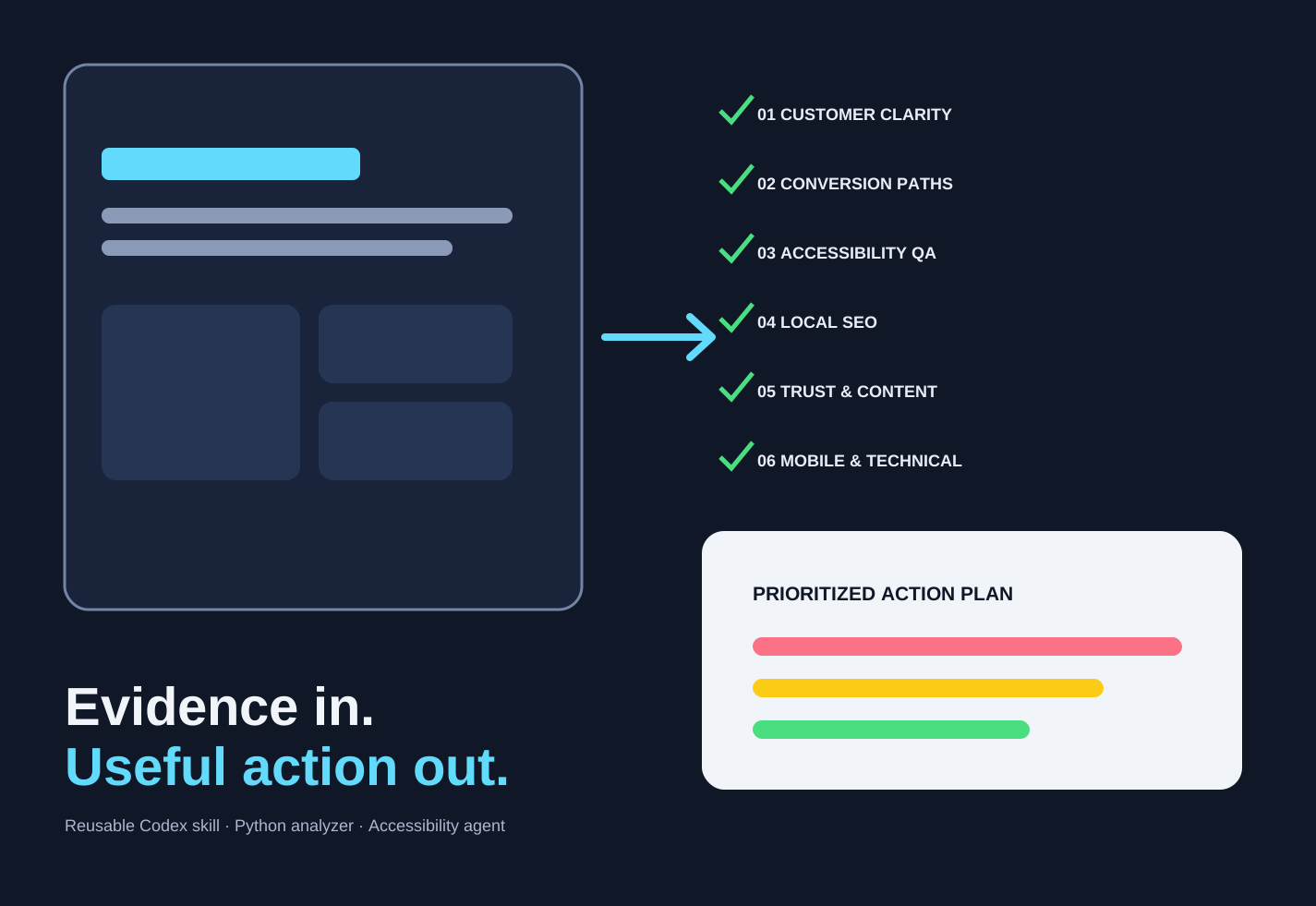
The skill combines deterministic HTML inspection with human-centered review. It checks customer clarity, calls to action, accessibility, local discovery, trust signals and mobile or technical quality, then turns the evidence into a prioritized implementation plan.
How the system works
- Establish the business, audience, service area and primary conversion goal.
- Inspect the pages that matter most to a customer decision.
- Run a Python analyzer against local HTML to collect titles, descriptions, headings, links, images and form-label signals.
- Apply a documented rubric across six audit categories.
- Rank confirmed findings from blocking issues through optional polish.
- Deliver fixes with evidence and a clear verification method.
Accessibility agent module
Accessibility is built into the system rather than added as a final checklist. The audit separates confirmed DOM issues, automated warnings and manual tests. It explicitly requires keyboard navigation, focus visibility, zoom and reflow, form-error behavior, screen-reader naming and motion review before anyone can make a conformance claim.
This distinction matters because automated tools can identify useful signals, but they cannot prove that a website is accessible to real people.
What I created and directed
- A complete
SKILL.mdwith triggering language, workflow, report structure, priorities and ethical guardrails. - A reusable audit rubric for conversion, accessibility, SEO, trust and mobile quality.
- A dependency-free analyzer produced by an AI coding agent under my direction, then tested and reviewed against local website output.
- A scoring model that explains its evidence and avoids presenting scores as certifications.
- A report format organized around executive decisions, developer-ready fixes and measurable acceptance checks.
Validation
I tested the skill against the actual production build of the four-page Tide & Toast café site-not the portfolio wrapper around it. The deterministic analyzer reviewed the home, menu, about and contact pages and extracted their titles, descriptions, heading structures, links and image alternatives. The rubric pass then evaluated the customer journey and business context.
Tide & Toast audit results
Executive summary
The site makes its offer and location clear, gives visitors an easy-to-scan menu, and maintains a consistent visual identity across four pages. Its main risk is expectation mismatch: Order online currently leads to the menu instead of an ordering flow, while the address, phone number and directions are fictional or generic. That is acceptable for a labeled portfolio concept but would block trust and conversion on a real café website.
Scorecard
| Area | Score | Evidence |
|---|---|---|
| Customer clarity | 5/5 | The homepage identifies a gluten-free café in St. Augustine and names coffee, pastries and brunch above the fold. |
| Calls to action and conversion | 3/5 | Menu and directions links are prominent, but Order online does not open an ordering experience. |
| Accessibility | 4/5 | Four pages have one H1 each, descriptive titles, image alternatives and labeled navigation; keyboard, focus, reflow and screen-reader testing remain manual. |
| Local SEO and discoverability | 4/5 | Every page has a unique local title and description; Restaurant or LocalBusiness structured data is not present. |
| Trust and content | 3/5 | Hours, menu prices and gluten-free positioning are useful, but the sample phone and fictional address must remain clearly identified as concept content. |
| Mobile and technical quality | 4/5 | Responsive navigation and reduced-motion handling are present; tap targets, overflow and real-device loading still need manual verification. |
These scores summarize this test and are not accessibility certifications, search-ranking predictions or real-user analytics.
Prioritized findings
P1 · Conversion - ordering call to action does not order
Evidence: The header link labeled Order online points to /menu on the
homepage and shared interior-page header.
Why it matters: A real visitor could reasonably expect to begin an order and instead reach a static menu.
Fix: For a live business, connect the action to the ordering provider or rename it View menu. For the concept, keep an obvious demo label.
Verify: Activate the link with keyboard and pointer input and confirm the destination matches its visible name.
P1 · Trust - placeholder location and phone details
Evidence: The contact page contains Sample phone: (000) 000-0000; the
address is fictional and the directions link opens the generic Google Maps
homepage.
Why it matters: Incorrect contact information is a direct trust and visit barrier if the site is mistaken for a real café.
Fix: Retain the portfolio-concept disclosure. Before launch, replace every placeholder with verified business data and a destination-specific map link.
Verify: Search the built output for Sample, (000) and generic map URLs,
then test the phone and directions actions.
P2 · Local SEO - no business structured data
Evidence: The source contains no application/ld+json Restaurant or
LocalBusiness data.
Why it matters: Search engines receive strong visible copy but no structured summary of the fictional business type, address, hours and menu.
Fix: If adapted for a real client, add validated Restaurant JSON-LD using only verified public information.
Verify: Inspect the rendered script and run it through a structured-data validator. Do not add schema to imply that the concept is a real business.
Accessibility QA still required
- Complete every page and slideshow control using only the keyboard.
- Confirm visible focus styles against every background and state.
- Test browser zoom and narrow-width reflow without horizontal content loss.
- Review landmarks, link names and slideshow announcements with a screen reader.
- Confirm reduced-motion behavior and pause controls for the automatic slider.
- Check contrast from computed colors, including hover and focus states.
Recommended action plan
Quick wins: Rename the concept ordering action, strengthen the demo notice, and make the directions link explicitly non-operational or remove it.
Next sprint: Run the complete manual accessibility pass and document the results alongside the automated evidence.
Before a real launch: Replace all business information, connect ordering, add verified structured data and test on representative mobile devices.
What this project demonstrates
The project shows that I can turn domain knowledge into a reusable AI workflow, combine deterministic code with model judgment, design responsible evaluation boundaries, and produce outputs that are useful to both business owners and developers.